Hardness Testing
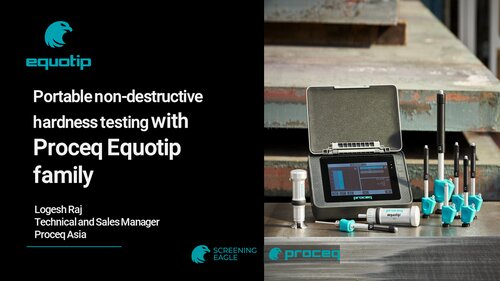
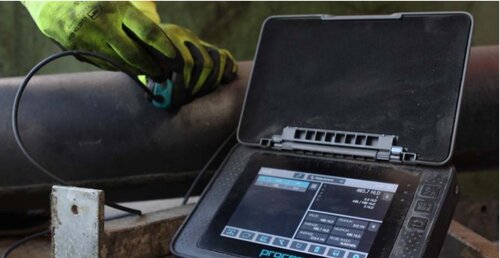
Equotip 550 Leeb
Highly robust and advanced Leeb measuring system
-
Swiss quality, accuracy, and reliability combined with powerful software features
-
World's broadest selection of probes and conversion tables
-
A fully rugged casing and long-lasting probes
- Swiss quality, accuracy, and reliability combined with powerful software features
- World's broadest selection of probes and conversion tables
- A fully rugged casing and long-lasting probes


Standards
-
 ASTM A 370
-
ASTM A 956
-
ASTM E 140
-
DIN 50156
-
DL/T 1845
(
China
)
-
GB/T 17394
-
ISO 16859
-
ISO 18265
-
JB/T 9378
Guidelines
-
 ASME CRTD-91
-
DGZfP Guideline MC 1
-
Nordtest Technical Reports 424-1, 424-2, 424-3
-
VDI / VDE Guideline 2616 Paper 1
Minimal mass of the tested piece
Minimum requirements for the surface roughness (and corresponding time)
Sample accessibility
Materials microstructure (coarser grains are preferably measured by the probes with higher...
It is Probe type C with 3 Nmm (vs. 11 nMm for probe D), its suitable for surface-treated materials or small objects, however it must fulfill the requirements specified by the standards and by Proceq.
Yes, very easy and has very high repeatability. The exception is a DL probe, which has presumably higher inertia due to the elongated impact body and unstable base of the probe. Due to this, the probe is known to be...
See MoreYes, but only if they follow the requirements specified by Proceq. Samples can be measured as coupled and uncoupled.
The wall thickness and mass of the test object can influence hardness testing according to Leeb or UCI....
See More- Tech Specs PDF - Equotip 550 Leeb
- Equotip Application Booklet
- Equotip 550 Quick Start Guide
- Equotip 550 Certificates
- Equotip 550 incl. Leeb U Operating Instructions
- Quick Charger Operating Instructions
- Conversion Curve Technical Note Equotip 550 (EN)
- Equotip 550 Third-Party Peripheral Device Integration Guide
- Equotip 550 Selection Guide
- Equotip Portable Hardness Testing Brochure