
Uncovering Internal Defects in an Underpass Wall with NDT
This application note demonstrates how combining magnetic induction, Ground Penetrating Radar (GPR), and Ultrasonic Pulse Echo (UPE) technologies delivers an uncompromised, 3D characterization of concrete structure and internal integrity.


Newsletter
Get the best NDT and InspectionTech content delivered straight to your inbox
Multi-Technology Concrete Assessment with Covermeter, GPR, and Ultrasonic Pulse Echo
Evaluating the structural health of aging concrete infrastructure often presents complex subsurface challenges. When assessing critical assets like underpass walls, relying on a single non-destructive testing (NDT) method can leave vital questions unanswered, especially when faced with dense rebar grid congestion, potential moisture ingress, and hidden structural defects. To achieve total diagnostic clarity, inspectors need a complementary multi-technology strategy.
Challenge
Evaluating aging or un-documented infrastructure often presents complex structural unknowns. In this underpass project, the primary objective was to thoroughly map the concrete wall's rebar configuration, determine exact cover depth and wall thickness, and identify any hidden internal defects or anomalies without damaging the structure.
Single-technology inspections often run into clear limitations in dense concrete environments:
- Complex Steel Congestion: A vertical construction joint between scan lines 11 and 12 introduced a localized concentration of steel (likely dowel bars), causing electromagnetic interference that compromised single-sensor cover measurement accuracy.
- Placement Errors & Anomalies: Shifted bar alignments and potential moisture ingress required verification beyond surface-level readings.
- Subsurface Layering: Confirming multi-pour boundaries and internal voiding deep within the concrete matrix was impossible via visual inspection alone.
Solution To overcome these structural complexities, a comprehensive multi-technology diagnostic workflow was executed using Screening Eagle’s connected NDT ecosystem:
PM8000 Covermeter
Chosen for its rapid area-scanning capability and precise magnetic field sensors, which provide the most accurate near-surface concrete cover measurements and rebar sizing without signal velocity calibration issues. Integrated Live AR projects the rebar grid directly onto the physical wall through the iPad display, enabling instantaneous on-site identification of bar spacing and placement anomalies.
Proceq GP8800 GPR
Chosen for its ultra-wide Stepped-Frequency Continuous-Wave (400–6000 MHz) technology, offering sub-millimeter resolution for shallow features and strong penetration up to 65 cm. Its compact handheld form factor allows scans right up to wall edges. GPR complements the covermeter by imaging complex 3D rebar geometry, assessing dielectric attenuation for moisture detection, and measuring overall wall thickness.
Pundit PD8050 UPE System
Chosen because electromagnetic waves (GPR) cannot penetrate dense steel layers or differentiate internal acoustic impedance boundaries well. Using multi-channel ultrasonic shear-wave transducers with 3D-SAFT (Synthetic Aperture Focus Technique) imaging, the PD8050 bypasses heavy rebar to map deep concrete core integrity, cold joints, delaminations, and air voids.
Result
By combining magnetic, electromagnetic, and acoustic wave technologies with AR-assisted visualization, the inspection delivered a fully cross-validated assessment:
Cover & Rebar Distribution: The PM8000 established an average concrete cover depth of 45.72 mm (standard deviation: 3.0 mm) and an average rebar spacing of 13.9 cm across 58 data points. Live AR projection overlaid this data directly onto the wall, visually confirming placement anomalies (highlighted in blue) and flagging the high-density dowel bar zone in real time.
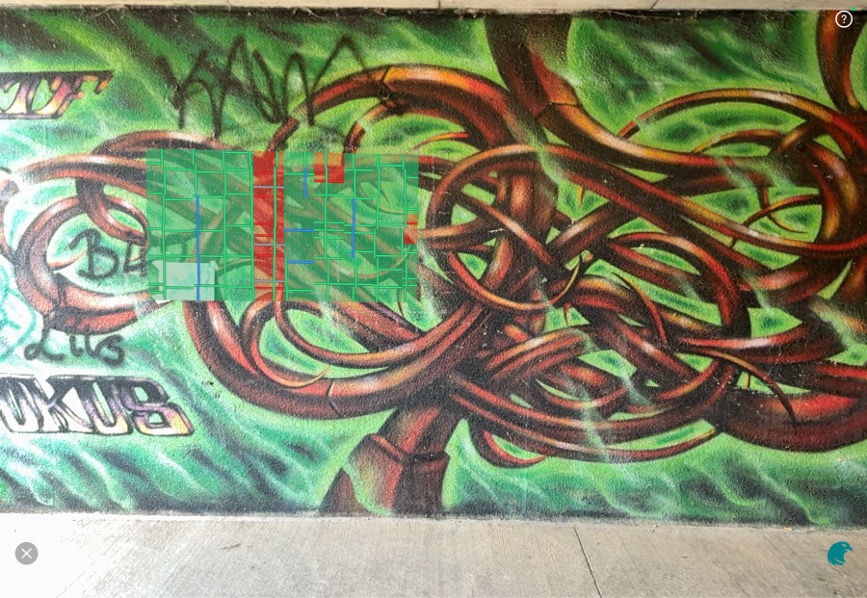
Profometer PM8000 covermeter data viewed with AR projection
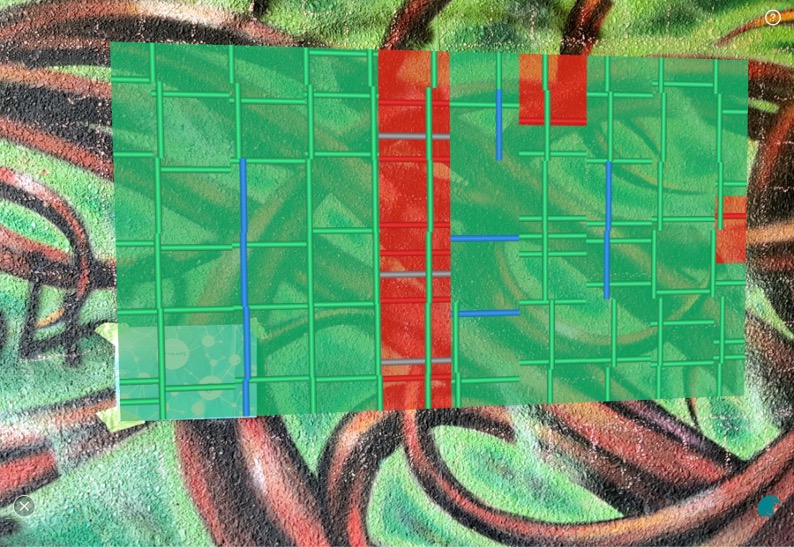
Profometer PM8000 covermeter data viewed with AR projection
3D Geometry & Wall Thickness: GP8800 cross-polarized scans suggested a total wall thickness of 35 cm and identified 5 larger-diameter vertical structural bars. Real-time 3D AR projection visually rendered these internal rebar paths and depth layers over the painted structure, simplifying target verification on-site.
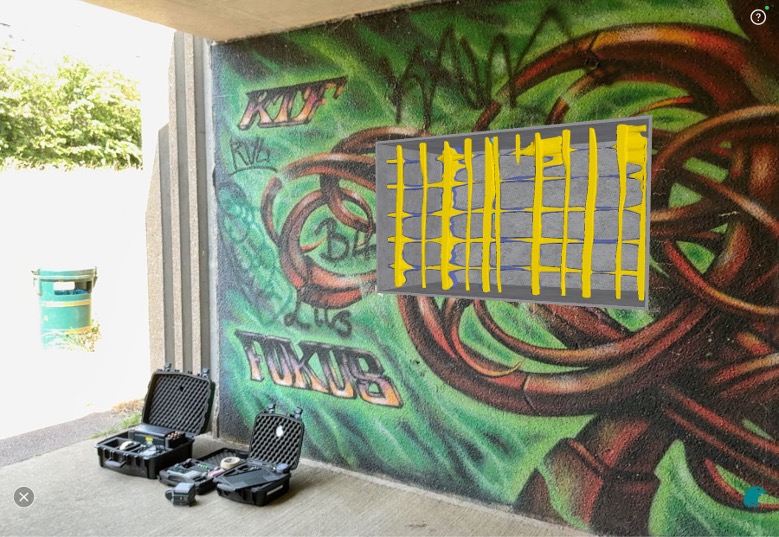
GPR data in 3D augmented reality projections with the GP app
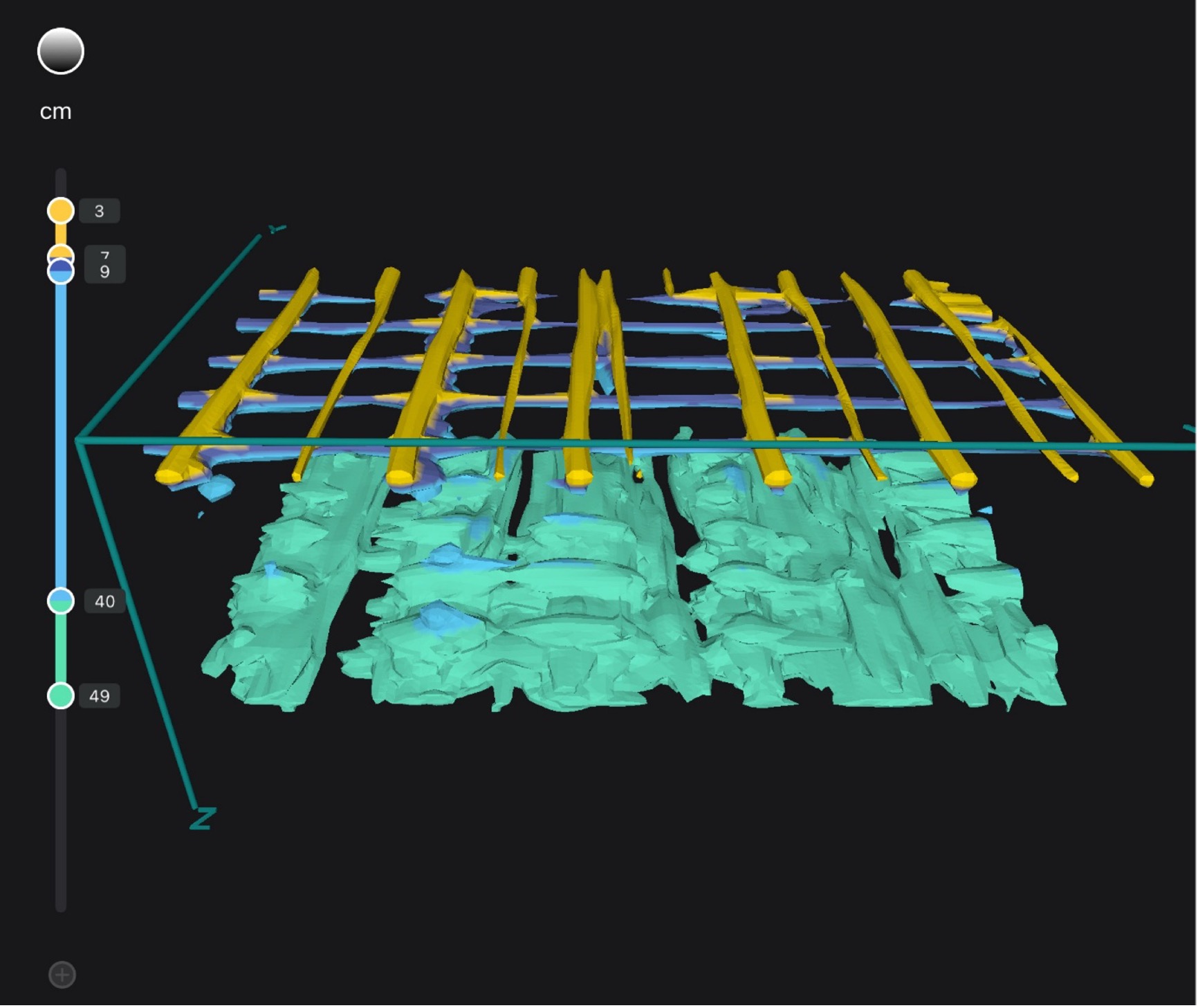
GPR data in 3D augmented reality projections with the GP app
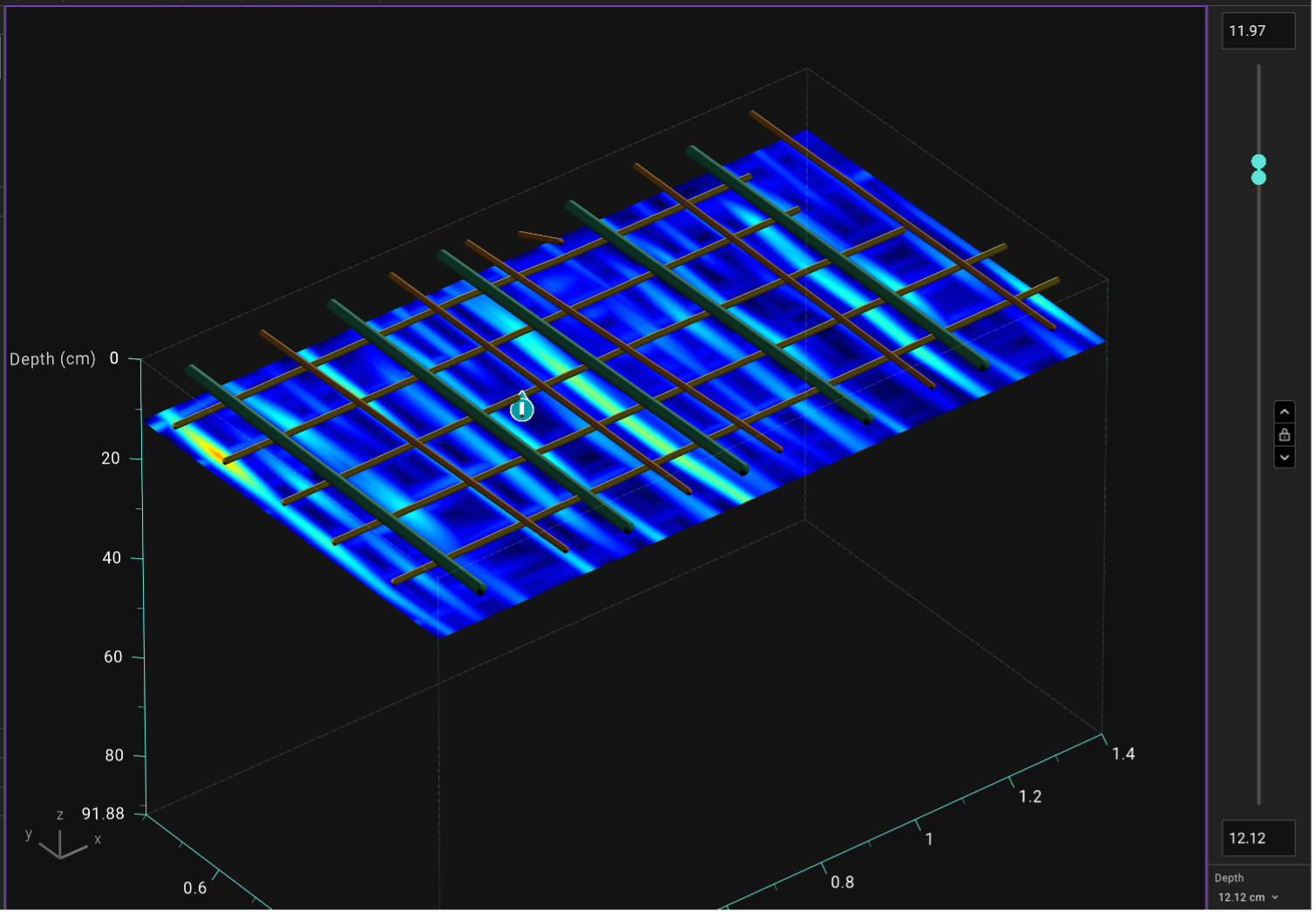
GPR data with 3D objects created in GPR Insights.
Moisture Mapping: Advanced post-processing in GPR Insights isolated electromagnetic signal attenuation/bleeding along the left most vertical rebar layer, mapping localized areas of elevated moisture content.
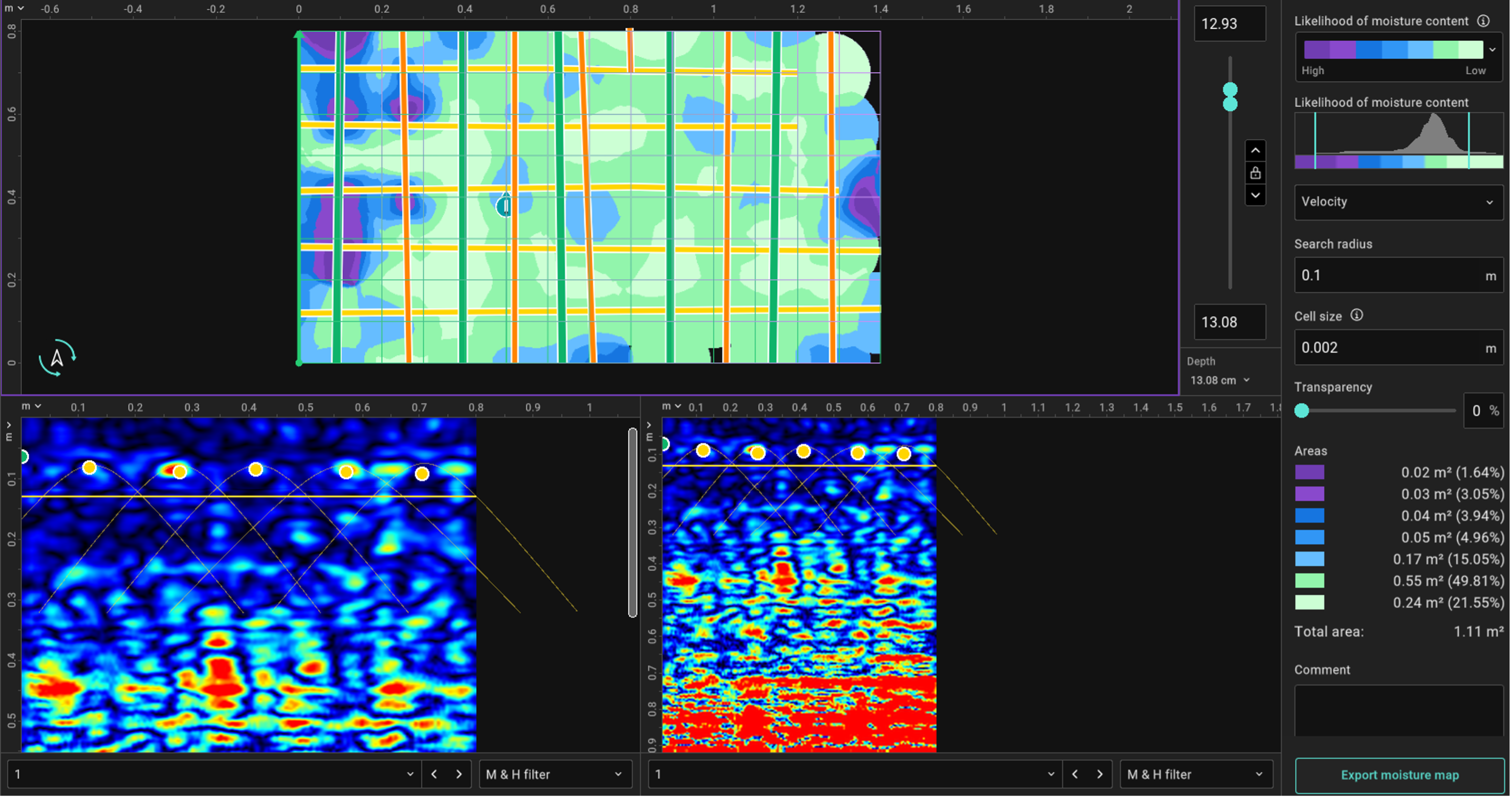
Moisture map viewed in GPR Insights software
Multi-Pour Boundary Detection: Pundit PD8050 UPE data, analyzed in Pundit Vision software with 3D-SAFT reconstructions, revealed two distinct horizontal echo boundaries at 400 mm and 800 mm, proving the wall was cast in two separate concrete pours.
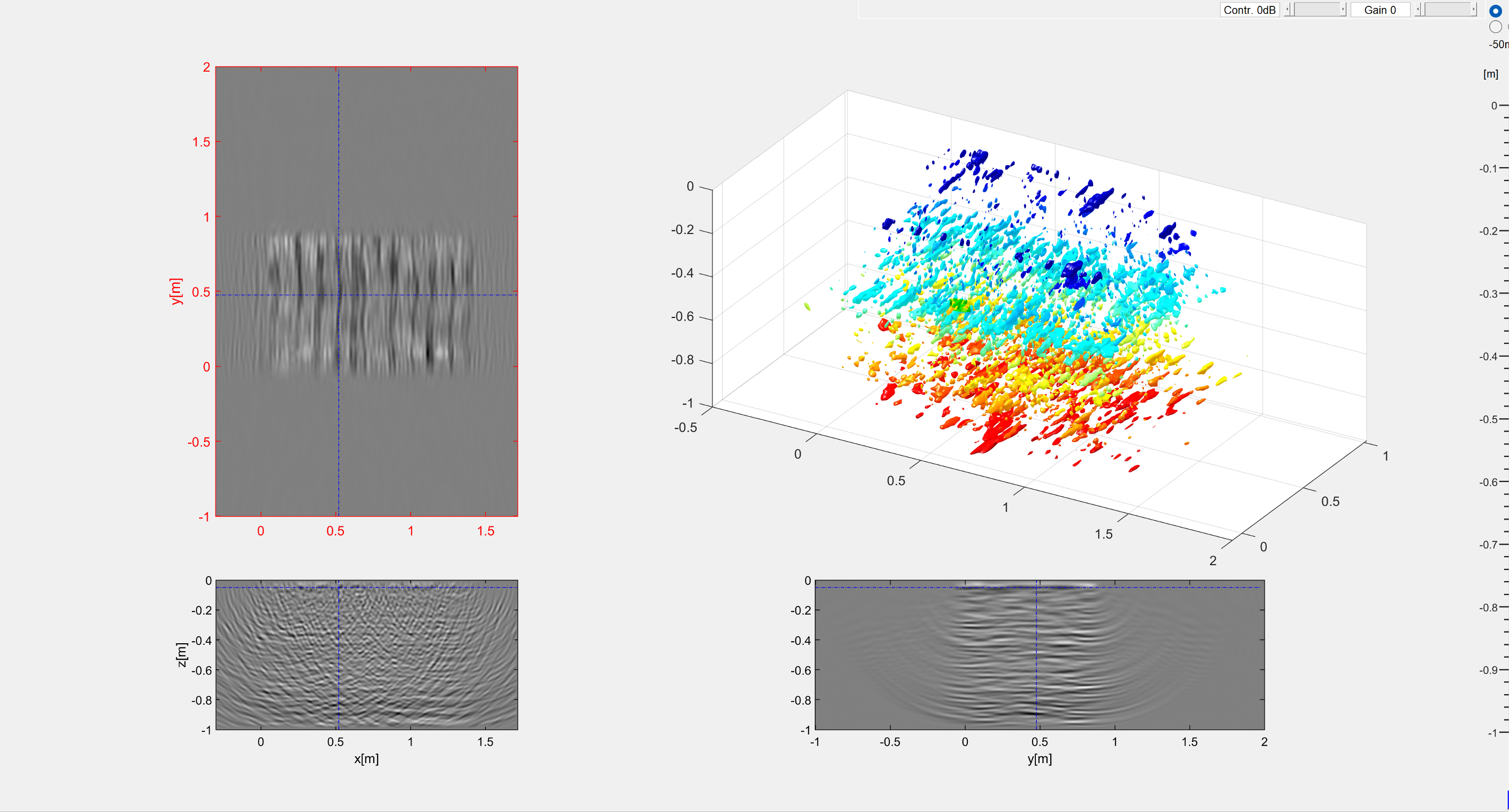
UPE data 3D-SAFT reconstructions with Pundit Vision software
Cold Joint & Internal Voiding: Deep UPE phase analysis recorded a strong acoustic reflection at the 400 mm boundary. Phase inversions (color-coded in light blue and green) confirmed a severe cold joint with internal voiding between pour layers.
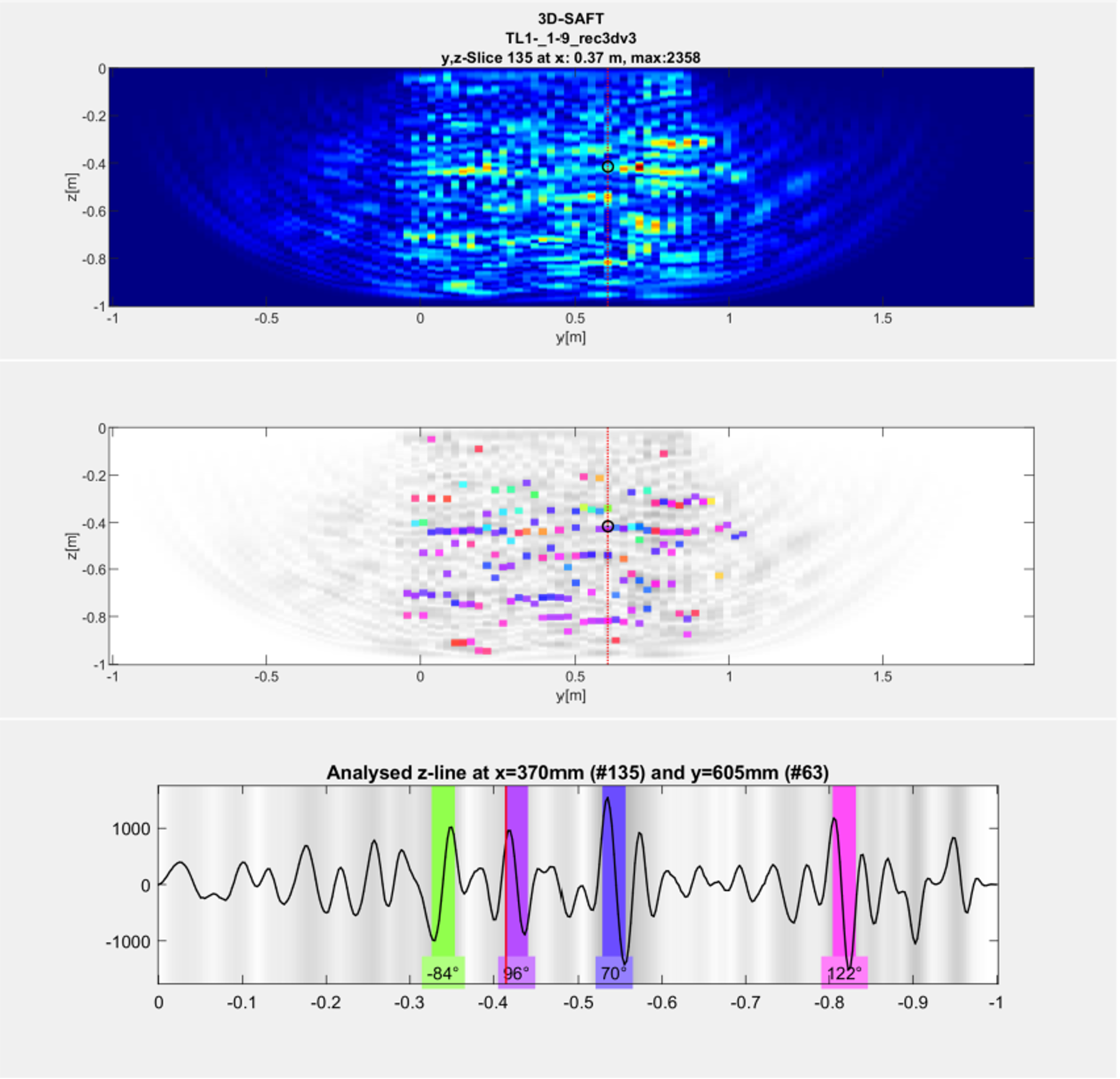
UPE data phase evaluation with Pundit Vision software
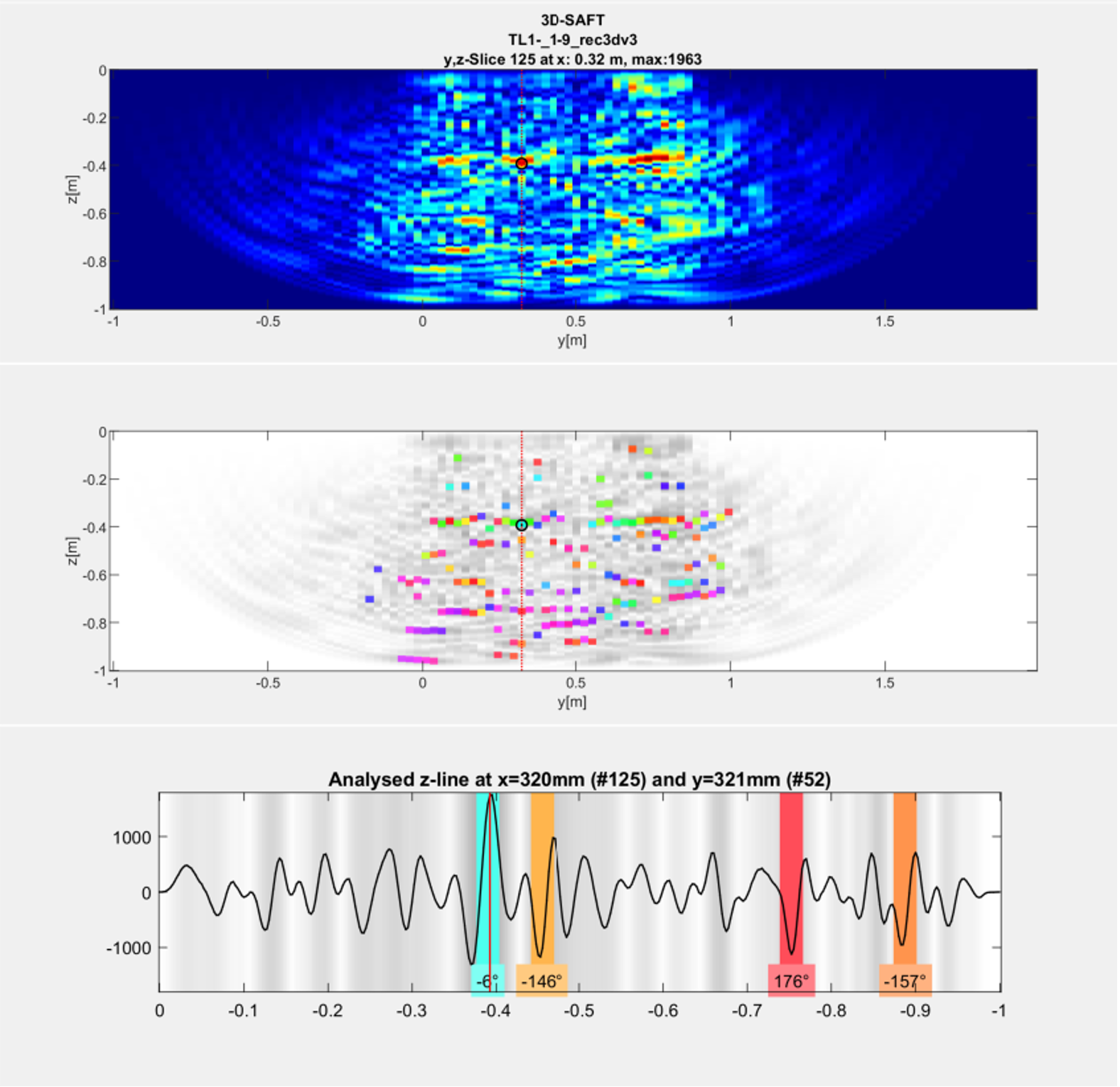
UPE data phase evaluation with Pundit Vision software
Using this integrated workflow, engineers gained complete clarity on both structural rebar details and critical subsurface integrity issues ensuring targeted, cost-effective maintenance without destructive coring.
See more NDT case studies and application notes in our Tech Hub.