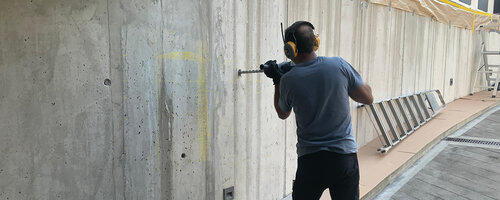
Non-destructive Testing of a Shotcrete Wall
See how FPrimeC Solutions used a combination of Ultrasound Pulse Echo and GPR to assess a shotcrete wall and keep drilling to a minimum.


Newsletter
Get the best NDT and InspectionTech content delivered straight to your inbox
Overview
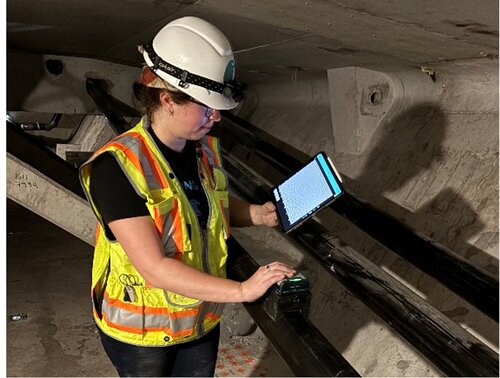
- FPrimeC Solutions was hired by a Shotcrete Contractor to verify the quality and integrity of shotcrete on or around a cold joint that was formed during the shotcrete construction.
- The Pundit PD8050 and Proceq GP8100 GPR were used to assess the shotcrete wall.
- The team were able to provide the client with a precise percentage of the area affected by anomalies and quantify the degree of improvement after the injection program.
Challenge
During the construction of a municipal structure, a horizontal cold joint formed within the shotcrete walls. A preliminary inspection by a third-party consultant identified visible cracking, leading to concerns regarding the structural integrity and density of the shotcrete in the affected area.
A repair program using crack injection was proposed. However, both the Shotcrete Contractor and the Engineer of Record required a data-driven method to:
- Assess the extent of internal voids and cracks prior to repair.
- Verify the effectiveness of the grout injection program post-repair.
- Minimize the need for destructive core drilling, which could further compromise the wall.
Solution - Assess Shotcrete Quality Before and After Repair
Multi-Modal NDT Approach FPrimeC Solutions designed a sophisticated non-destructive testing (NDT) program leveraging Proceq’s industry-leading sensor technology. By combining acoustic and electromagnetic methods, the team could "see" through the shotcrete with high precision.
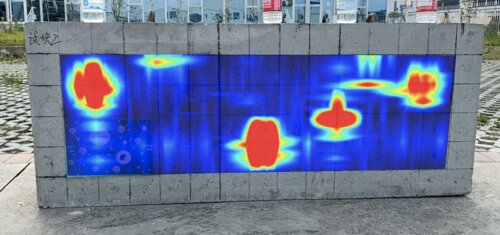
Ultrasonic Pulse Echo (UPE) Tomography: FPrimeC utilized Proceq’s UPE technology as the primary assessment tool. The wall was mapped using a dense 100 mm x 100 mm grid. By performing line scans before and after the repair, the team could visualize internal reflections.
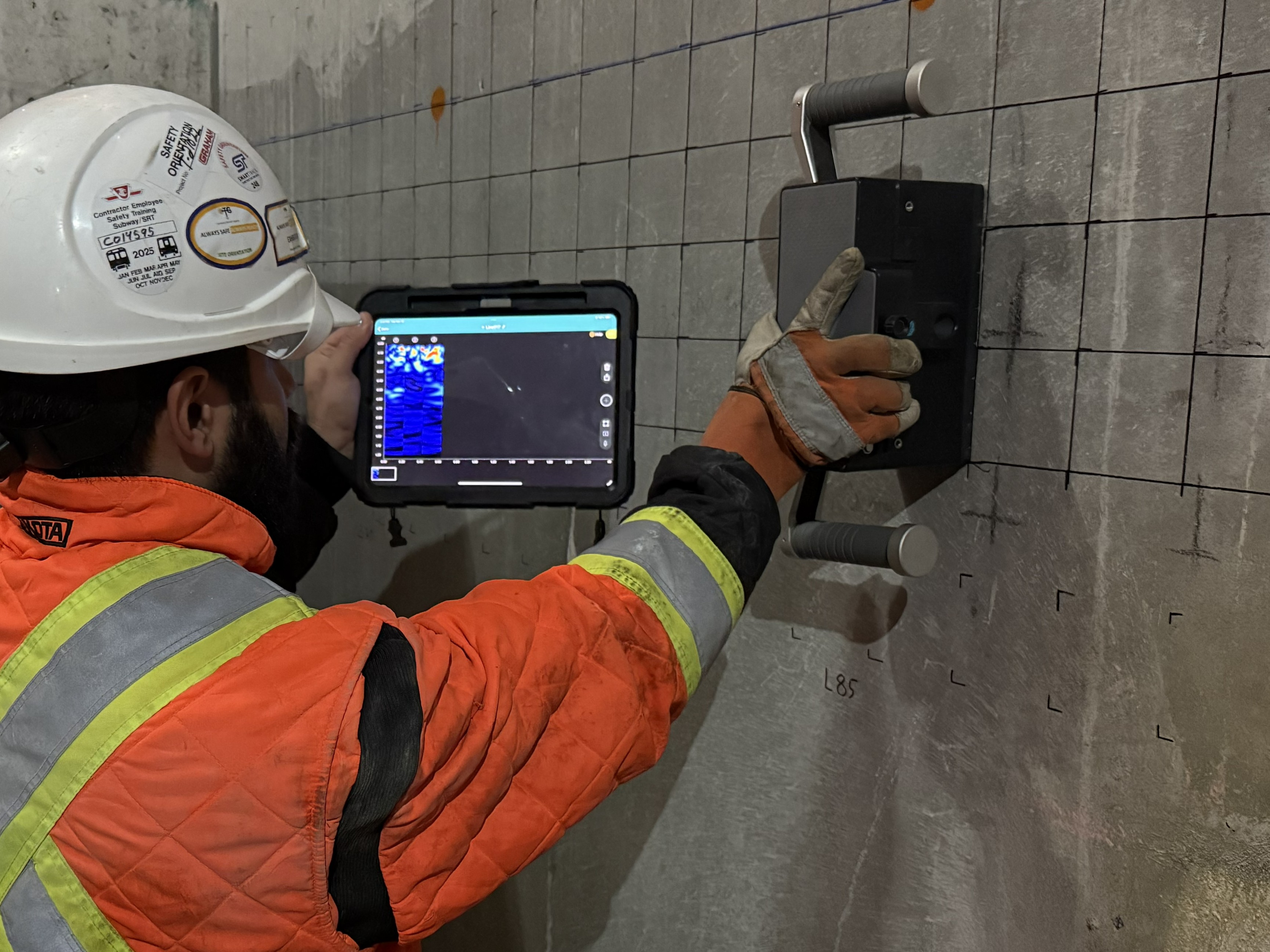
The goal was to monitor the change in acoustic response: voids and cracks show high-intensity reflections, while successfully grouted areas allow the signal to pass through, indicating a monolithic structure.
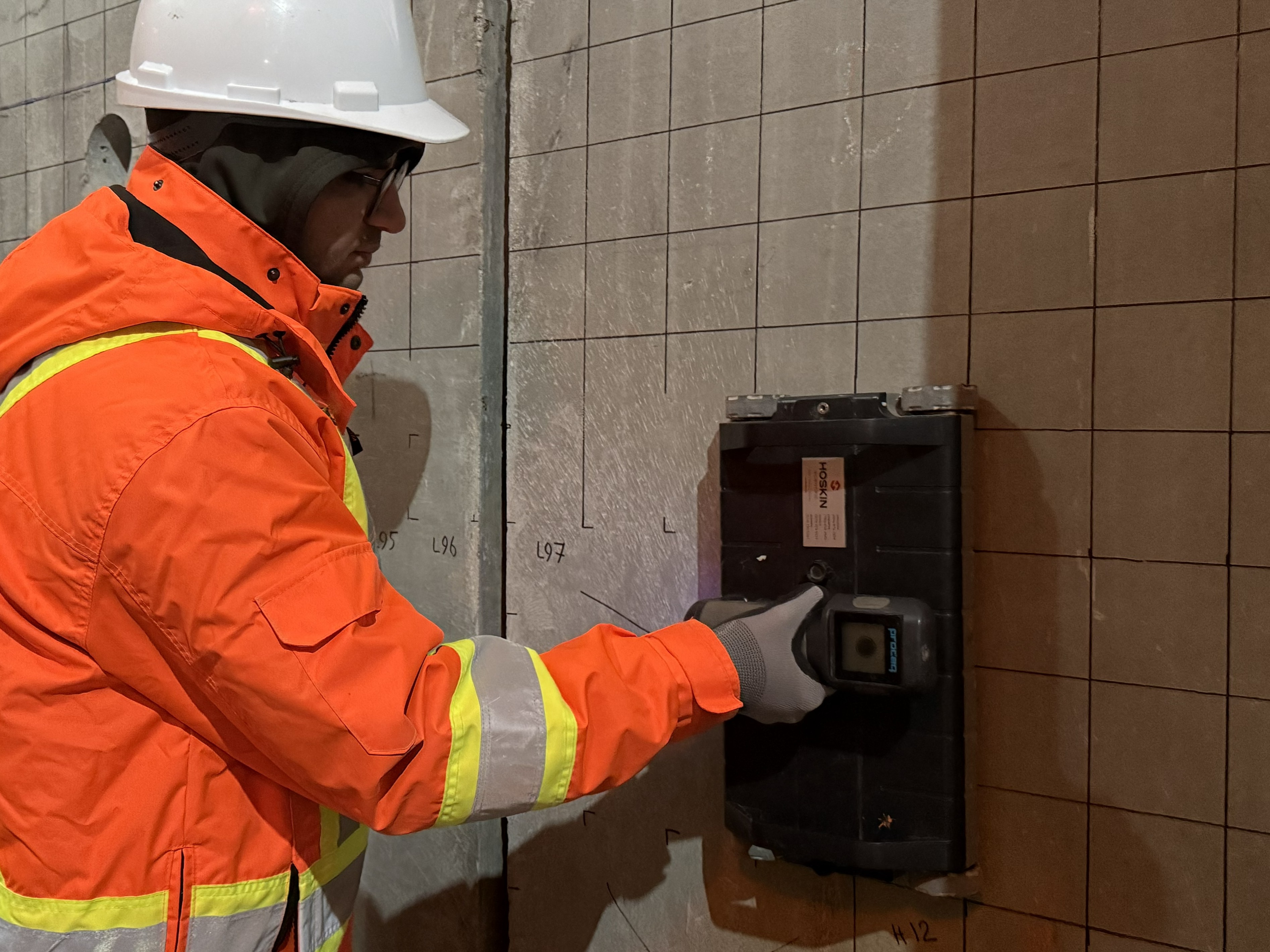
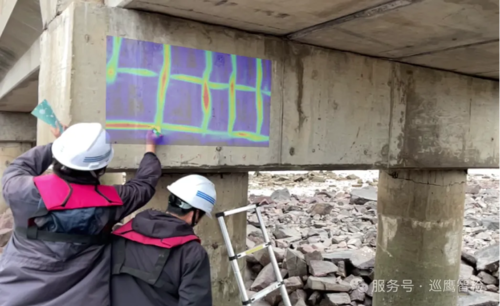
Ground Penetrating Radar (GPR): To ensure the accuracy of the UPE data, Proceq’s GPR was used as a secondary method. This allowed the engineers to precisely map the layout of steel reinforcement.
By identifying rebar locations, FPrimeC eliminated the risk of "false positives" (interpreting reflections from steel as internal defects), ensuring the final analysis was focused strictly on shotcrete quality.
The Results
The use of Proceq’s NDT solutions transformed a subjective visual inspection into a quantifiable quality control process.
Visual Proof of Repair: Post-repair UPE B-scans showed a significant reduction in reflection intensity from the previously identified anomalies. This provided visual and mathematical evidence that the grout had effectively filled the voids and cracks.
Minimal Intrusion: By utilizing high-resolution tomography, the project team significantly reduced the number of required core samples. This saved time, reduced costs, and maintained the structural integrity of the walls.
Quantifiable Improvement: FPrimeC was able to provide the client with a precise percentage of the area affected by anomalies and quantify the degree of improvement after the injection program.
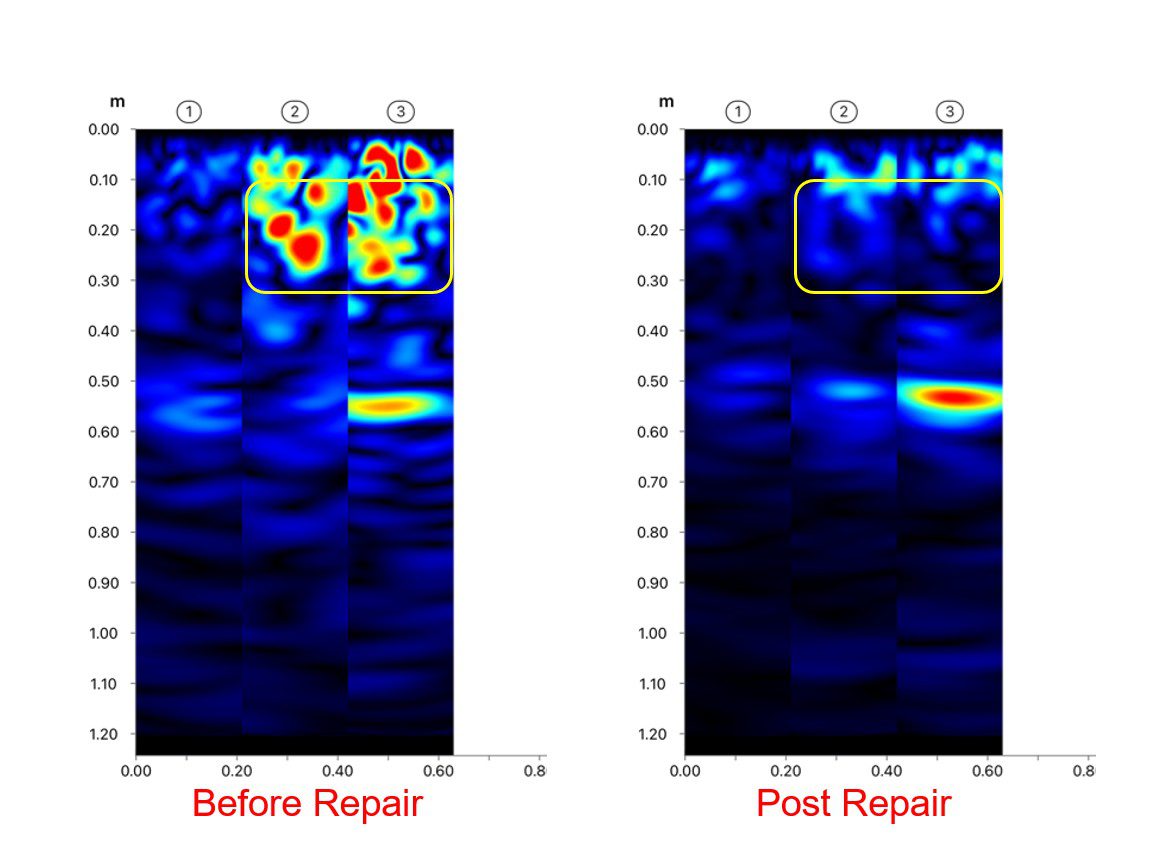
With the help of Proceq’s NDT technology, FPrimeC Solutions provided the contractor and engineer with the "high confidence" certification needed to approve the shotcrete wall without the need for costly removal and replacement.
This case study was originally featured on FPrimeC.com.
See more real-life case studies using ultrasonics and GPR in our Tech Hub.