Non-destructive testing of a concrete wharf with GPR & AI
See how ground penetrating radar (GPR) and artificial intelligence (AI) were used together to make efficient work of a concrete wharf inspection to detect hidden issues and internal defects.


Newsletter
Get the best NDT and InspectionTech content delivered straight to your inbox
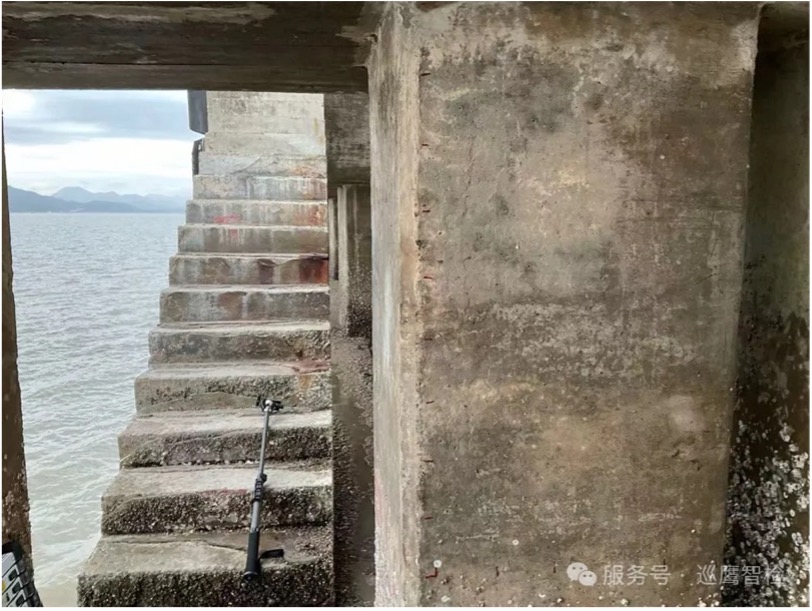
A wharf is a reinforced concrete frame, including bridge deck, piers, panels and other key load-bearing components. Because its service environment is affected by load, dry and wet alternation for a long time, there may be a risk of hidden diseases such as abnormal protective layers, internal defects, and steel bar rust.
In order to accurately locate the rebar layout, restore structural drawings, and troubleshoot the internal hidden dangers of the structure, this project used advanced non-destructive testing technology to carry out comprehensive diagnosis. The whole process of technical support was provided by Hunan Wangxuan Technology Co., Ltd., the Chinese partner of Proceq.
Core challenges
- Hidden diseases are difficult to identify: the internal concrete rebar displacement, abnormal protective layer, deep defects, rust and other problems are invisible to the naked eye, and conventional instruments cannot be accurately located.
- The thickness of the components is large and the difficulty of detection is high: the cross-section of the bridge deck and pier components is large, and the detection depth of ordinary rebar detectors is insufficient to obtain complete internal information.
- Detection efficiency and accuracy are difficult to be compatible: manual reading of radar graph workload is large and error-prone, which requires taking into account detection speed, data accuracy and report standardization.
- The structure cannot be damaged: The key facilities of the wharf are strictly prohibited from damage testing, and the diagnosis must be completed in a pure non-destructive way.
Solution
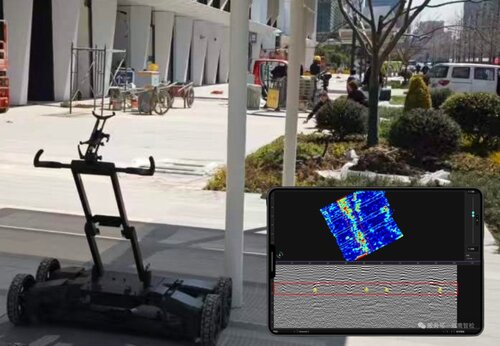
Hunan Wangxuan uses the Proceq GP8000 ground penetrating radar to carry out all-round scanning and detection of wharf bridges and piers:
- Subdivision fine detection: divide multiple core measurement areas, cover all components of bridge decks, piers and panels, and adopt the combination of regional scanning + linear scanning.
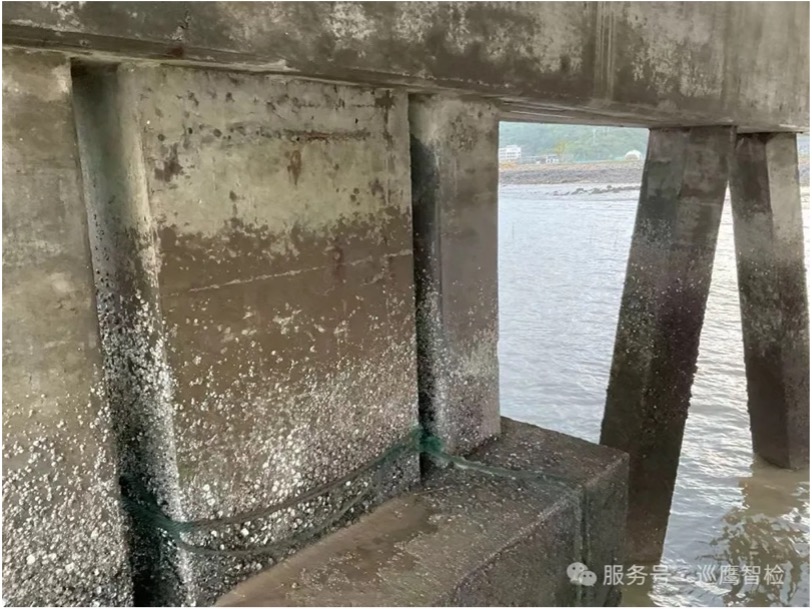
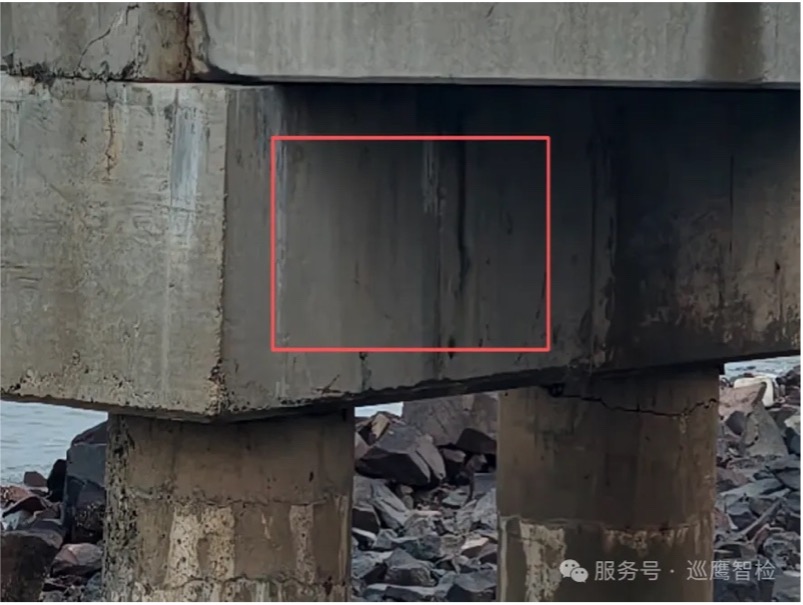
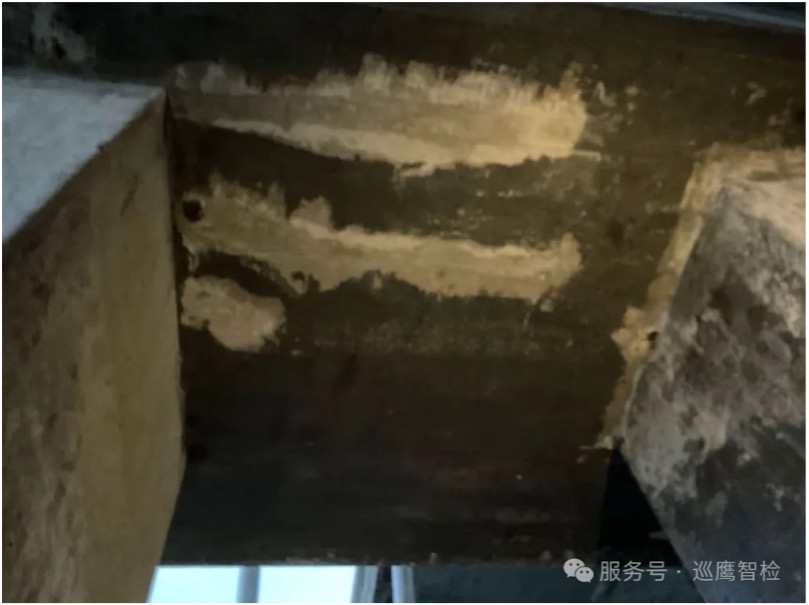
- Accurate calibration of parameters: It is determined that the dielectric constant of concrete is 7.6 through dielectric constant fitting, which greatly improves the calculation accuracy of the thickness of the protective layer and the target depth.
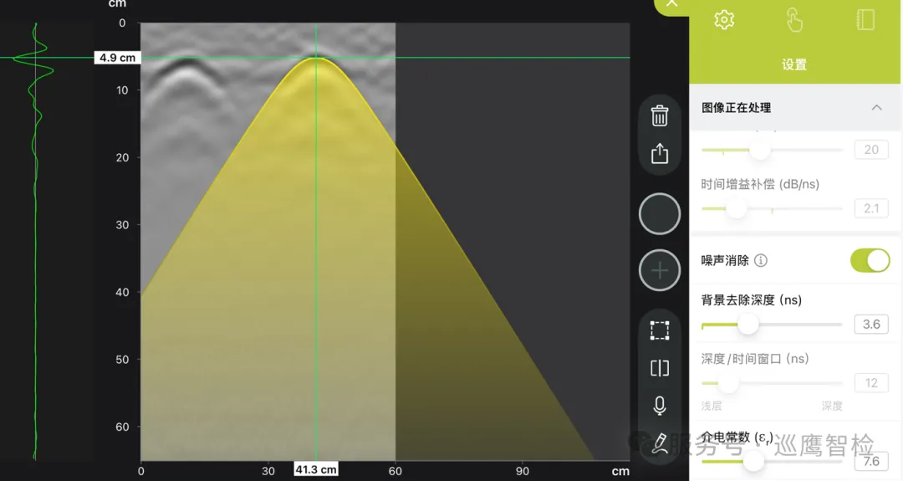
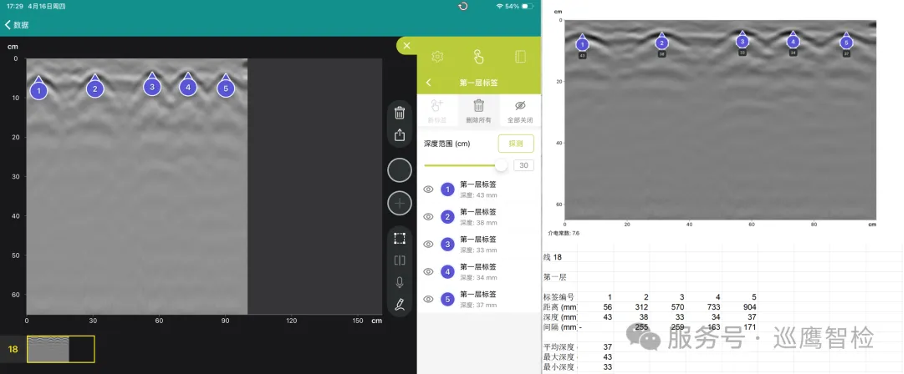
- AI intelligent analysis: Enable the AI automatic marking of rebar function, automatically mark the number, spacing and depth of rebars, and support one-click export of standardized Excel reports.
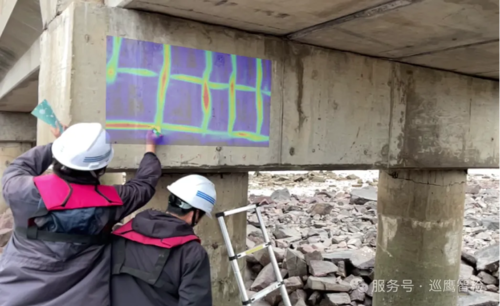
- Imaging and visualization: Combined with slice imaging, radar spectrum and AR reality augmented projection, it realizes the internal visual diagnosis of the structure and visually displays the defect and rebar state.
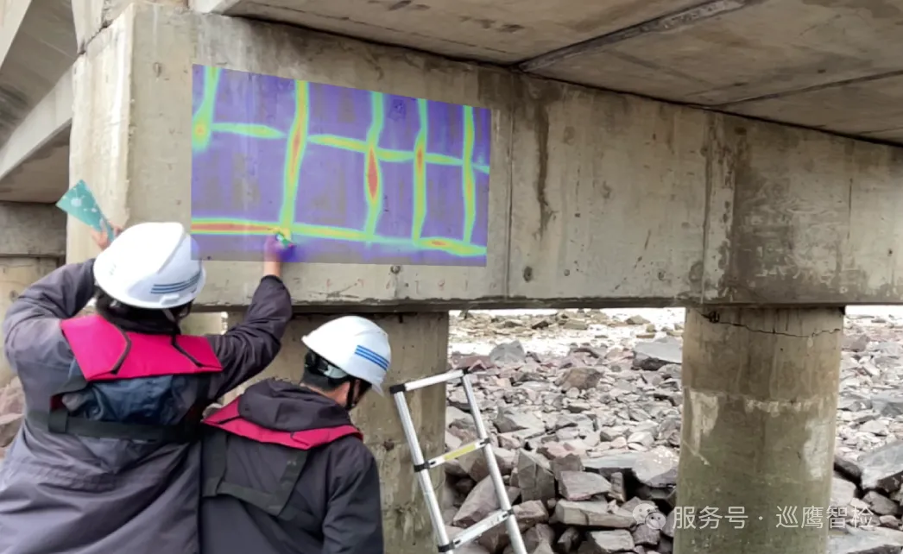
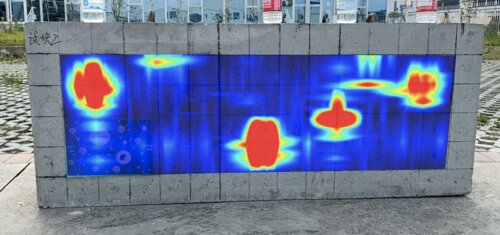
- Comprehensive Defect Determination: Accurately assess the internal defects of concrete and the degree of rebar rust according to the waveform amplitude and phase characteristics.
Test results
1) Accurately detect rebars and protective layers
- It was found that the thickness of the protective layer of one of the bridges was abnormal.
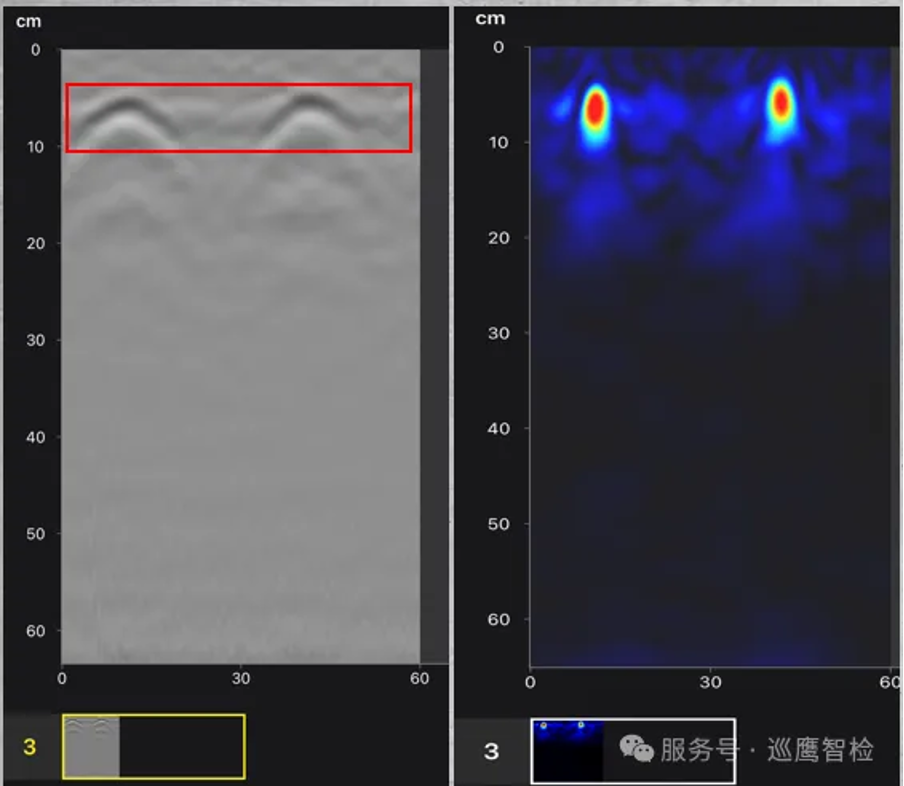
The thickness of the main reinforcement protective layer in other areas is 4.9cm.
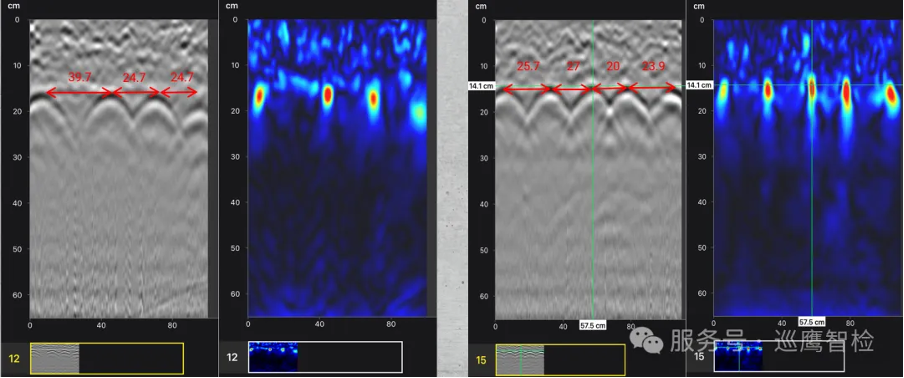
Abnormal area main reinforcement protective layer 14.8cm (left), hoop reinforcement protective layer 14.1cm (right) This kind of situation is difficult to detect with traditional instruments
- The bridge surface can clearly detect the double-layer reinforced mesh.
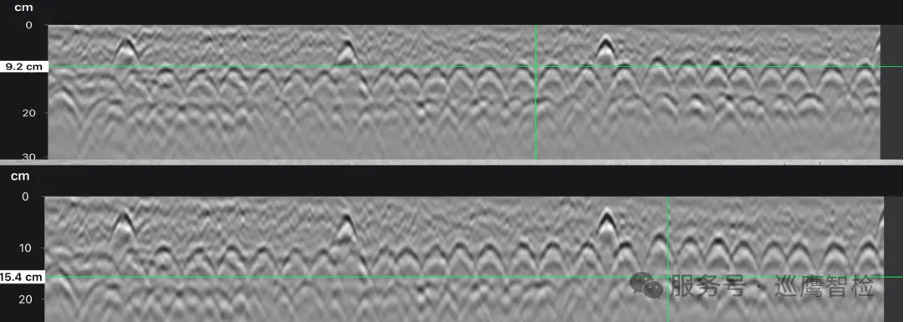
The first layer of steel is 9cm, and the second layer of steel is 15.5cm.
2) Successfully locate defects and rust
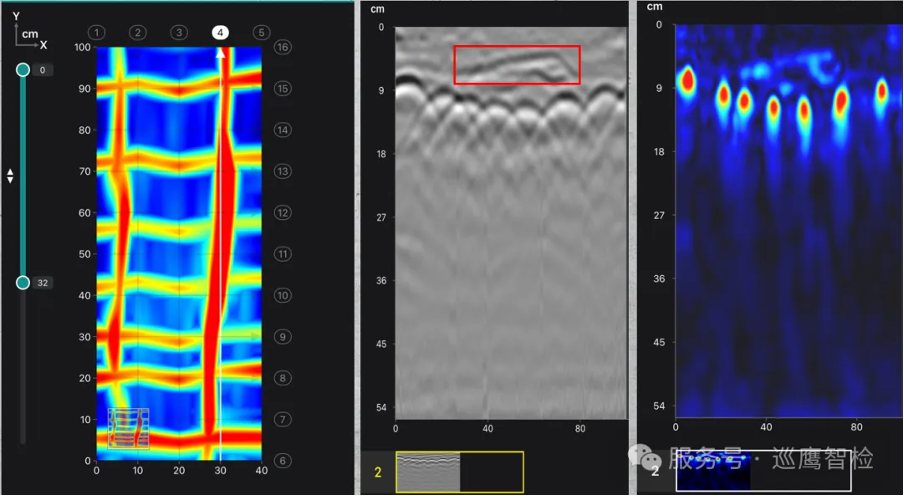
- Internal defects of concrete were detected in an area at the bottom of the bridge, and the location and scope were clarified.
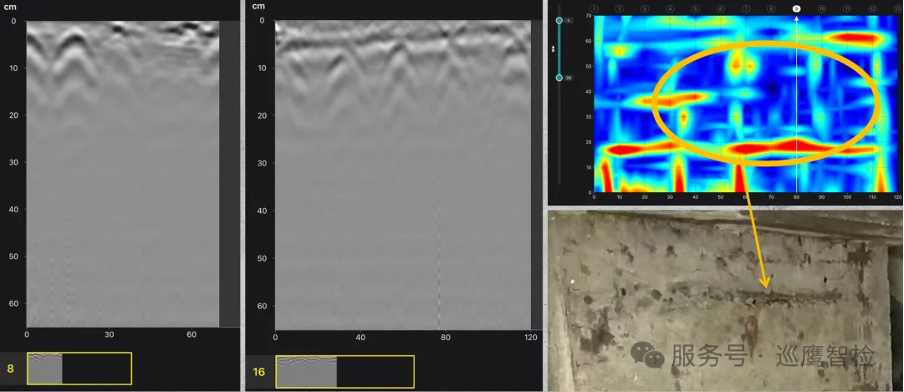
- According to the radar amplitude characteristics, it is determined that there is a serious steel bar corrosion in the position of a pier, and the structural risk is warned in advance.
3) Technical value and engineering results
- No damage throughout the whole process: do not destroy the structural ontology and meet the protection requirements of the wharf facilities.
- Deep breakthrough: Solve the problem of deep detection of large-section components, and detect displacement and hidden defects that are difficult to find in traditional equipment.
- High efficiency and accuracy: AI automatic marking of rebar greatly improves efficiency, and the data can be directly used for structural safety assessment and reinforcement design.
- Results available: Provide a complete and reliable scientific basis for dock maintenance, reinforcement, safe operation and maintenance.
See more case studies of GPR in our Tech Hub.