Monitoring Racetracks or Highways with Multichannel Ground Penetrating Radar (GPR)
Racetracks are high-stress environments where asphalt must withstand extreme speeds and constant friction. See how they can be monitored efficiently to ensure driver safety and track longevity.


Newsletter
Get the best NDT and InspectionTech content delivered straight to your inbox
How to ensure driver safety and track longevity with comprehensive inspection of the circuit
Overview
- The team at Alberta’s Rocky Mountain Racetrack prioritizes professional-grade maintenance and wanted to conduct a comprehensive inspection of the entire circuit.
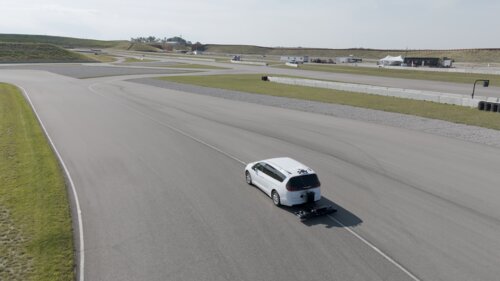
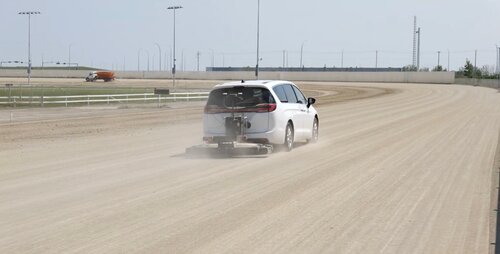
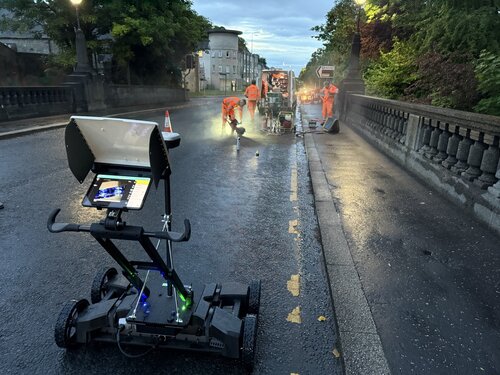
- The GM8000 mobile mapping GPR was used as a fast solution to scan the entire track.
- Data was collected at 60km/hr with the entire track completed in 1 hour.
- Provide High-Resolution Digital Imagery (2.5cm spacing) of the subsurface and assist in identifying potential issues.
Challenge
Maintaining a professional-grade race circuit like Rocky Mountain Motorsports (RMMS) in Carstairs, Alberta, presents a unique set of challenges. Racetracks are high-stress environments where asphalt must withstand extreme speeds and constant friction.
To ensure driver safety and track longevity, the management team needs to monitor:
- Asphalt Thickness: Identifying areas that may lead to premature cracking or surface failure.
- Sub-grade Uniformity: Detecting inconsistencies in the underlying layers that could cause uneven settlement.
- Debonding: View interface maps for potential debonding issues
- Crack Monitoring: Take Measurements
- Environmental Degradation: Monitoring for erosion and "washout" that can compromise the track’s engineering integrity.
Traditional inspection methods often require extensive downtime, which is a significant hurdle for a facility that operates 12 hours a day, seven days a week.
Solution
To address these challenges with minimal disruptions to operations, RMMS utilized the GM8000 multichannel mobile mapping GPR due to its:
Efficiency & Speed: The equipment was mounted to a vehicle, allowing the team to scan the entire circuit in 1 hour. Resulting in minimal downtime.
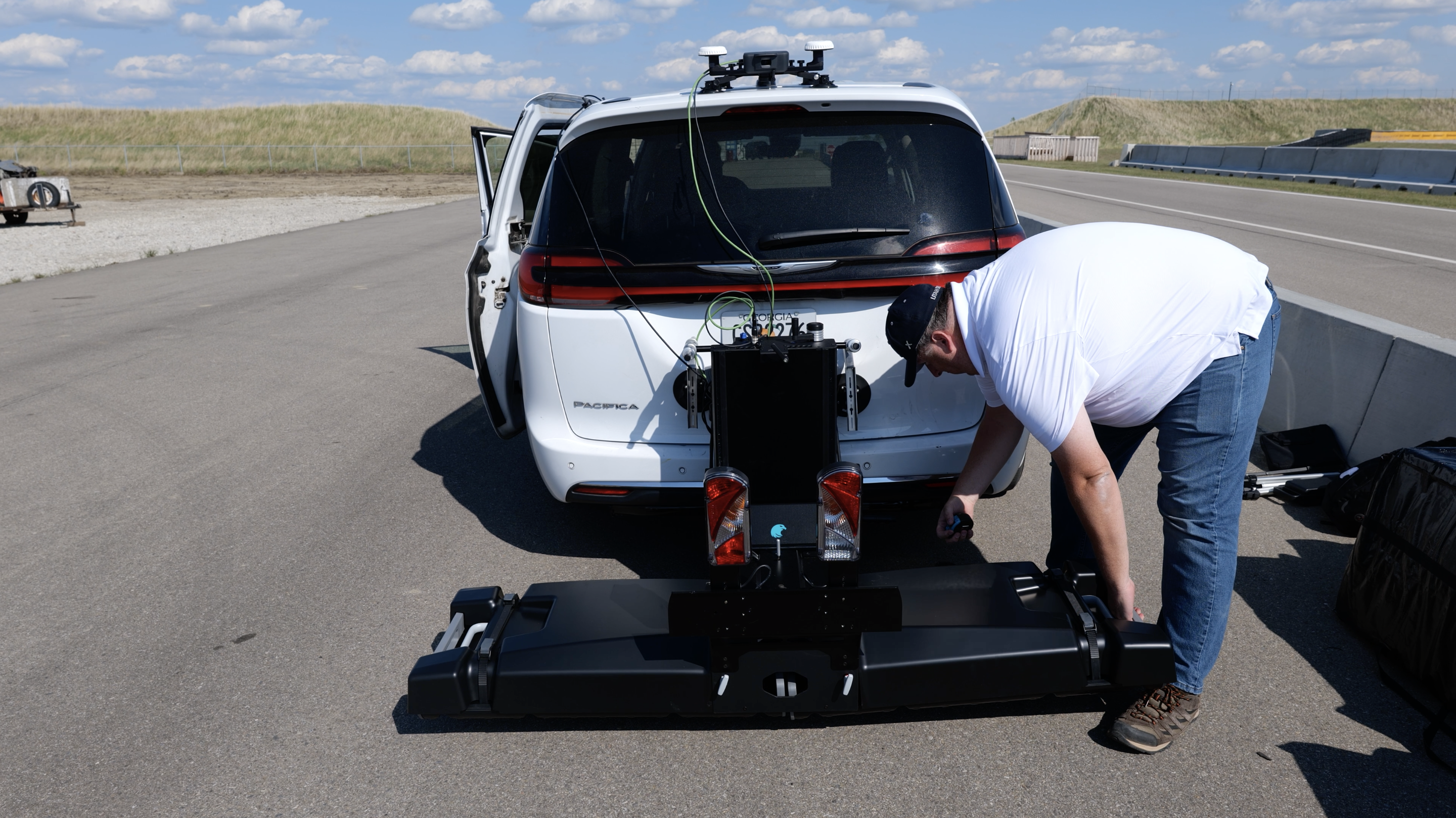
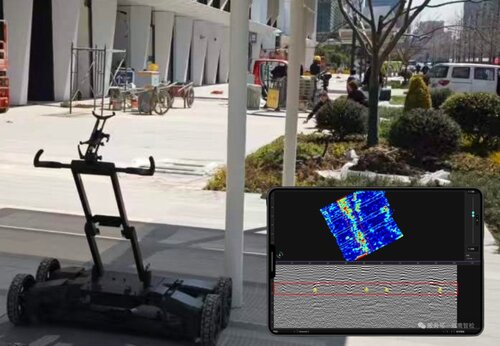
High-Resolution Data: With its 101-channel array, the GM8000 provides high resolution data in real-time, offering a comprehensive “map” of the track’s subsurface.

Ease of Use: Brad Young, the Track Operations Manager, noted the incredible ease of use, which allowed for rapid deployment and data collection.

“The ease-of-use of this equipment is actually incredible. We were able to go around the track at a decent pace. Being able to monitor for erosion and washout will really help us maintain the integrity of the engineered driving surface.”
Results
The track now has a digital model of the subsurface at the time of the scan. They can use this to monitor asphalt thickness, interfaces between different mix-designs and the uniformity of the underlying soil. This provides the maintenance team deliverables to inform their efforts on thin or high-wear areas rather than premature repaving. By monitoring the uniformity of the sub-grade and sub-base, RMMS can get ahead of voids, erosion or washout issues.
GPR Insights post-processing software was used to analyze the data in more detail, map the racetrack layers using automated tools and create different types of condition assessment maps. If borehole information is available, it can be imported to further calibrate and refine the results.
Having a dense set of data points allows RMMS to maximize the lifespan of their expensive facility, ensuring a high-quality driving surface for members and professional racers alike.
As one of the first circuits to utilize such advanced GPR data, RMMS is setting a new standard for how motorsports facilities are maintained and managed.
See more use cases on GPR in our Tech Hub.