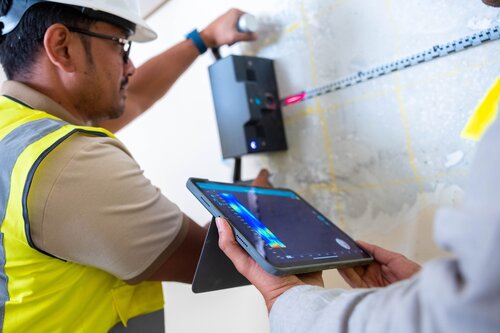
Discover advanced commercial construction inspection solutions

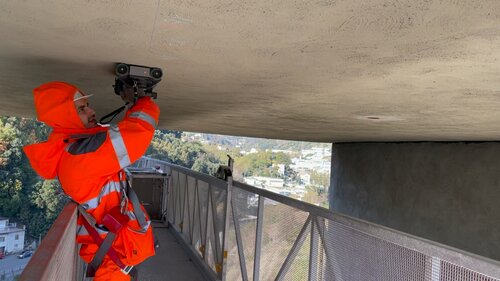
Visual Inspection
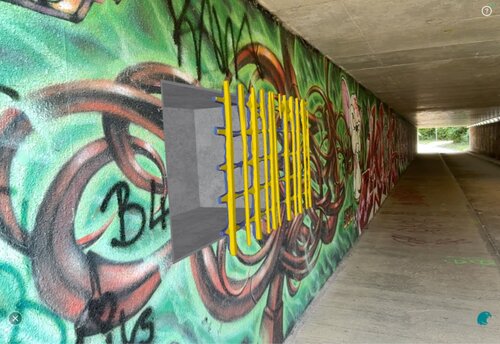
Record visible damage such as cracks or spalling in the touch of a button.

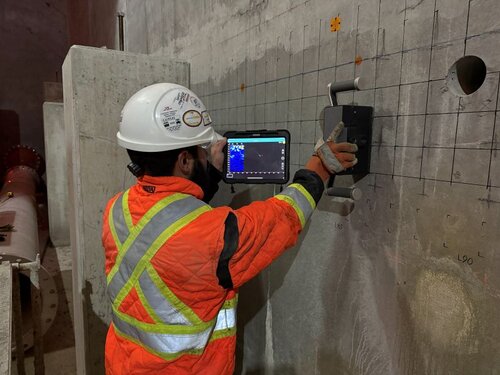
Utilities Location
Subsurface GPR is a popular solution to assist in various stages of the construction process.

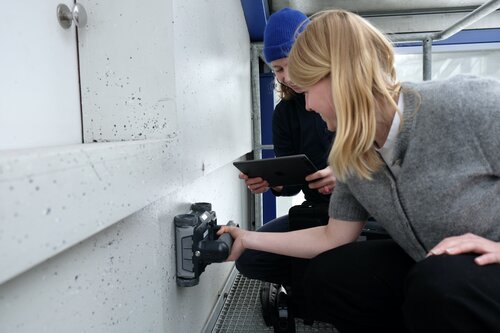
Defect Detection
Detect hidden defects in concrete, such as cracks, voids, and delamination.

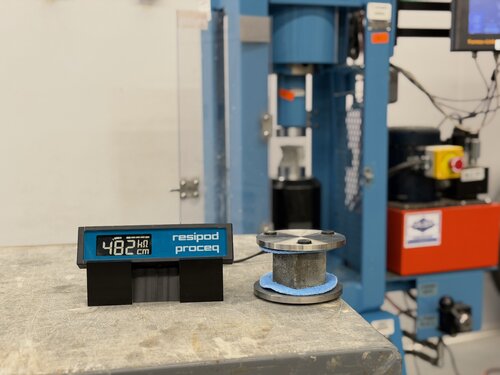
Concrete strength testing
Determine the properties of concrete, detect weak spots, locate best spots to drill.

Metal Hardness Testing
Ensure safety and functionality on metal components and steel structures before they are used.

Flaw Detection
Early detection of these flaws enables prevention of failures and ensures the quality and longevity.
Save time and costs on your construction assessments with efficient solutions
Streamline the inspection workflow
with intelligent software
Boost productivity on inspections with powerful software to capture, manage and report NDT and visual inspection data. With customized checklists you ensure nothing is left out. All findings can be viewed in real-time at the office enabling proactive response to any issues. From initial project planning, to final report generation, trust in intelligent inspection workflow software like Screening Eagle Inspect to make the job more efficient and compliant.


Assess foundations and concrete slabs
with subsurface ground penetrating radar
Subsurface GPR delivers a reliable way to assess the depth and integrity of foundations to ensure the stability of the construction. It's also the fastest way to locate and map subsurface utilities or underground elements to check they are properly aligned and connected during installation. Subsurface GPR is also used to evaluate concrete slabs, detecting voids or irregularities that could affect the structural integrity of the floor.

Enhance structural imaging
with ultrasonic pulse echo
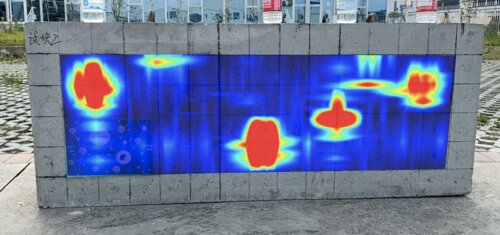
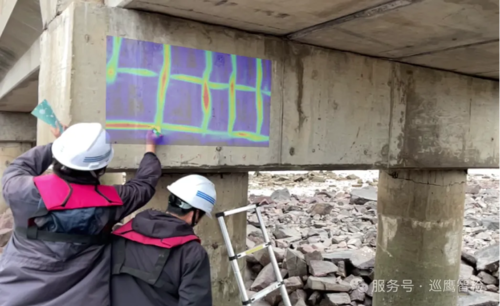
Locate defects in concrete structures and visualize them immediately in large scale 2D, 3D, heatmap or augmented reality modes for fast onsite analysis. With an ultrasonic structural imaging system like the Pundit PD8050, you get the best of both worlds with pulse echo and pulse velocity testing in one easy-to-use sensor. Ultrasonic pulse echo and pulse velocity can also be used to measure the thickness of concrete and estimate homogeneity and strength.

Check the compressive strength of concrete
with rebound hammer technology
Gain a rapid indication of the compressive strength of concrete using rebound hammer testing. The Schmidt rebound hammer has been used for decades as an effective non-destructive solution for compressive strength testing on all types of concrete structures including commercial buildings like retail stores, hotels, and offices.

Check hardness of structural steel
with portable hardness testers
Inspection of structural steel is a crucial form of quality assessment to confirm the steel is compliant with industry standards. Hardness testing is a key part of structural steel inspection to ensure safety and functionality on metal components and steel structures before they are used in the construction. Discover the Equotip family of portable hardness testers to inspect all types of structural steel with high precision

Detect flaws in structural steel
with ultrasonics (UT)
Flaw detection in structural steel is crucial to ensure the safety and integrity of commercial buildings. NDT methods like ultrasonic testing can effectively detect subsurface defects that could compromise the structural integrity of steel components. Early detection of these flaws enables prevention of failures and ensures the quality and longevity of the structure

Have multiple requirements, or not sure of the best solution for you?
Our product specialists will help guide you through the process of finding the right solution for your needs.