2. Tower Bridge – England
Tower Bridge is one of the UK´s most famous bridges, built back in 1886. The construction took a total of eight years to complete with more than 11,000 long tons of steel used for the towers and walkway framework, plus over 70,000 long tons of concrete for the two piers to support the structure. The framework was then clad in Cornish granite and Portland stone to protect the steel.
Preventive inspections for Tower bridge
Visual inspections
In the UK, bridges are required to undergo visual inspections every two years and a closer inspection every six years. Any concerning findings must be followed up with deeper inspections using specialist technologies to see into the stone or concrete and detect corrosion. We can see in an inspection report from March 2021 that in the last visual inspection for Tower Bridge there were no priority findings, some work required and some minor rust present.
This likely came as a relief after the extensive repairs and refurbishment the bridge has received over the years. During major repairs in 1991 and 1992, further corrosion was discovered leading to reinstatement of the structure as originally built, to restore the bridge´s strength and maintain its safety.
What´s difficult to see from the report is where exactly the rust is located and what the predictive maintenance timeline may be for the areas marked as ‘early signs of deterioration’ or ‘moderate defect/damage’, ‘some loss of functionality could be expected’.
But it doesn´t have to be guesswork. With software like INSPECT, not only can all findings be documented in a few clicks, but everything is also geolocated to the exact position. For structures that require regular inspections like the Tower Bridge, knowing exactly where the defects are can save hours of time for the next inspectors or maintenance team. Furthermore, INSPECT provides a single source of truth, with data from past and current inspections stored safely together. This avoids the common issue of data loss from paper reports or having several reports from different times all stored in different places. This can include not just the visual inspection data, but also the data from deeper inspections with various technologies.
Deeper inspections
Unlike the other bridges on this list, Tower Bridge is a combined bascule and suspension bridge which draws open to let ships pass through around 800 times per year. It also happens to be the largest drawbridge in the world. This means that inspections of Tower bridge, especially deeper inspections, can be a long and complicated process.
The base of each of the primary towers contains the hydraulics and counterweights for opening the 1200 ton bascules that make the roadway over the bridge. In 2021, these bascules failed to close after letting a ship pass through, leaving hundreds of motorists and pedestrians stranded at each end as they waited for it to be fixed. The high functionality of Tower Bridge combined with its age, requires a multi-technology, thorough approach to inspections to gain the full picture.
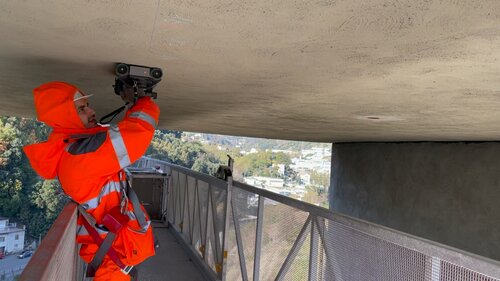
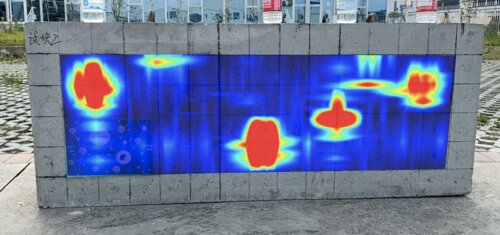
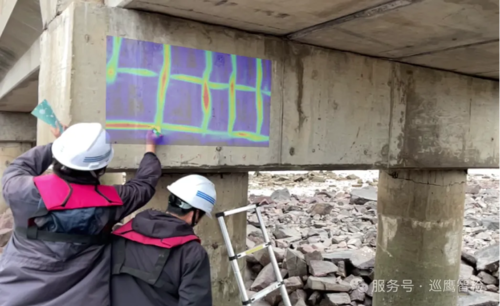
For example, to access, map and monitor the active corrosion in the concrete, advanced Half-Cell technology is an efficient solution. To test the concrete strength and uniformity, rebound technology, Ultrasonics Pulse Velocity and Ultrasound Pulse Echo work well as portable and accurate methods.
The durability of the concrete is also influenced by its water permeability. For structures like bridges that are located in and above water, checking the permeability can be an extremely valuable health indicator. To measure the permeability of the concrete on Tower bridge, a permeability tester can be used to give an accurate indication.
For the roadway, subsurface GPR can be used to access and map the road layer profile. The metal components can be inspected with specialist flaw detection technology and non-destructive hardness testers.
Data from the visual and multi-technology inspections can then be used to create an accurate timeline for predictive maintenance.